
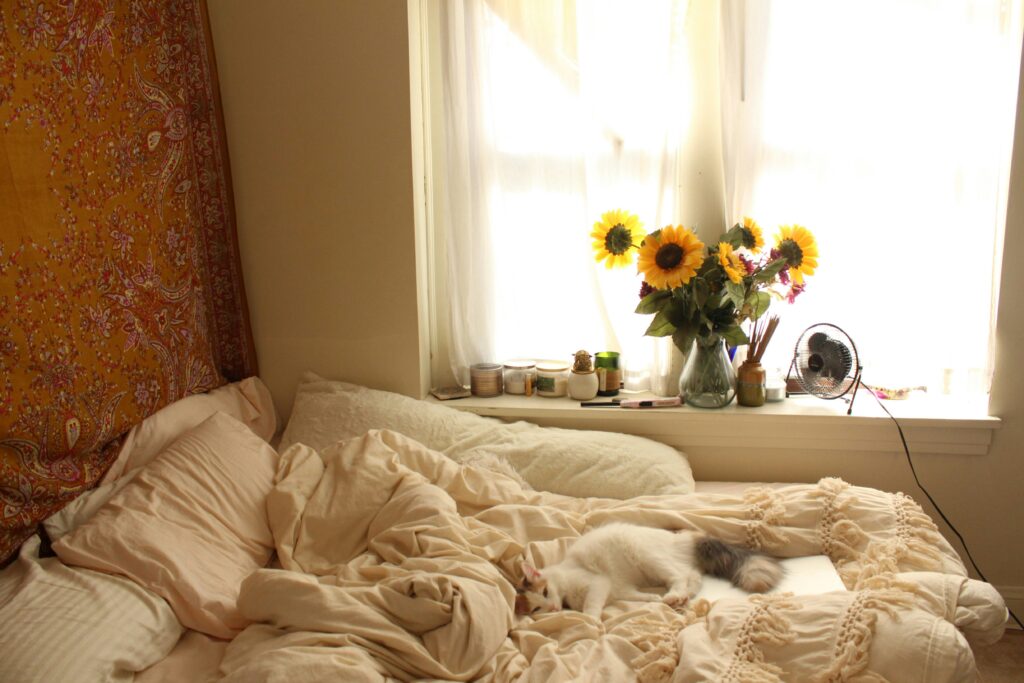
Eight hours a night in the wrong environment isn’t rest. It’s a slow, invisible leak in everything you’re trying to build — and classical feng shui has been diagnosing this for centuries.
9 min read · Bedroom · Wealth Corner · Commanding Position · Small Space Feng Shui
You’re earning. You’re showing up. You’re doing more than most people would consider reasonable. And yet the financial traction never quite matches the output. Before you blame the strategy, look at the room you spend eight hours in every night. Traditional feng shui has been making this argument for centuries: the energy quality of your sleep environment determines the quality of energy you bring into everything else. The bedroom is not passive. It is the engine room. And if the engine is running rough, everything downstream shows it.
This is a room-by-room feng shui bedroom setup guide, built on classical principles, for people who want results, not rituals, including a full section for small-space and apartment dwellers who can’t clear everything and need practical offsets that actually work.
What a Feng Shui Bedroom Wealth Setup Actually Does
In classical feng shui, the bedroom holds a specific rank in the hierarchy of spaces. It is classified as a yin environment: a space for restoration, consolidation, and regeneration. When a yin space is treated like a yang one, cluttered, activated, energetically noisy, the body cannot fully recover. The chi that should be replenishing you is being consumed by your environment instead.
The wealth connection is direct. A person who wakes up genuinely recovered makes better decisions, takes better risks, and holds composure under financial pressure. A person running on partial recovery is making every money decision from a depleted baseline. The feng shui bedroom wealth setup is about engineering that baseline, not decorating a room.
The Core Principle
Your bedroom must make you feel completely safe and at ease. When it does, your nervous system stops allocating energy to subconscious environmental monitoring and redirects it entirely to recovery. That full recharge is the foundation everything else is built on. You cannot outperform a bad night’s sleep, no matter how good your strategy is.
Feng Shui Bed Placement: The Commanding Position Explained
Classical feng shui is precise about this: the position of your bed is not a styling preference. It is the primary variable in your bedroom’s energetic structure, and it affects your wealth and health more than any object or color in the room.
The commanding position places you facing the door, off its direct axis, with a solid wall behind your head. The reasoning is physiological as much as energetic. Your subconscious threat-detection system never fully switches off during sleep. If your body cannot see the entrance to the room, it stays partially alert all night. That partial alertness consumes energy that should be going toward recovery.
Here is the real cost: every night in a non-commanding position, your nervous system silently allocates resources to environmental monitoring instead of restoration. You wake up functional but not recovered. You make decisions from a baseline slightly lower than it should be. Over months and years, that compounding deficit shows up in your finances, your risk appetite, and your clarity under pressure.
Commanding position fixes
01
Reposition diagonally from the door
So you can see the entrance without being in direct line with it.
02
Add a solid, substantial headboard against a solid wall
It acts as an energetic anchor and a structural safety signal.
03
Avoid the coffin position
feet pointing directly at the door. This is one of the most consistently flagged configurations in classical texts.
04
Don’t back the head against a window.
Vibration and airflow behind the head disrupt sleep depth. A solid wall is non-negotiable here.
Feng Shui Wealth Corner in the Bedroom: What to Place and Where
Every room has an energy map. In classical feng shui bagua application, the prosperity area of your bedroom sits in the far-left corner of the entrance. Most people use it for a laundry pile or a forgotten floor lamp. That is a direct drain on the room’s wealth energy.
What occupies your wealth corner sends a signal, not symbolically but energetically. Clutter communicates scarcity. A dying plant communicates stalled momentum. A broken lamp communicates blocked output. You do not need elaborate objects here. You need intentional placement and clear surfaces.
[Topic] is not what most people think it is. It is not a collection of [things] you put somewhere and forget. And it is definitely not a substitute for doing anything real.
What works in the wealth corner
01
One healthy, living plant
Growth energy in the prosperity corner is the single most classical placement in this tradition.
02
Clean, unobstructed surfaces.
In feng shui, open space allows chi to pool and settle. Empty is not wasted — it is available.
03
If the corner is a closet
organize it, clear the floor, and keep the door shut. A contained, tidy wealth corner still functions.
Feng Shui Under-Bed Storage: The Problem, the Rules, and the Small-Space Fix
This is the fix that gets the most resistance. It also matters more than most people want to acknowledge, especially when space is tight.
In classical feng shui, the area beneath the bed is in direct energetic proximity to the sleeping body for eight hours. Whatever is stored there circulates into your field throughout the night. Old documents, clothes from a life chapter you have closed, items carrying unresolved emotional weight: all of it becomes ambient input during your most receptive hours. The practical equivalent is sleeping on a pile of old liabilities and expecting to wake up clear-headed about money.
The ideal is a completely clear under-bed space. Free airflow supports free chi movement. But for anyone living in a studio, a small apartment, or a shared home, that ideal needs a workable structure around it, not just a rule.
The feng shui under-bed storage hierarchy
Best
Completely clear
Nothing underneath. Maximum airflow and chi circulation. The classical ideal and the highest-energy option.
Acceptable
Soft, neutral items only
Spare linens, blankets, pillows. No emotional charge, no historical weight. Sleep-adjacent and energetically quiet.
Compromise
Off-season clothing, current life only
Spare linens, blankets, pillows. No emotional charge, no historical weight. Sleep-adjacent and energetically quiet.
Avoid
Documents, metal, charged objects
Paperwork, old correspondence, broken items, sentimental objects with unresolved history. These are the primary energetic drain.
One clarification that comes up: plastic storage bins do not create an energetic barrier. The objects inside still carry their charge. A bin organizes the clutter — it does not neutralize it. The variable that matters is what you put in the bin, not the bin itself.
Small-space feng shui: how to offset under-bed storage
If under-bed storage is genuinely non-negotiable, the classical approach is to strengthen the supporting elements around it. You cannot fully neutralize the drain, but you can balance the equation from the other side. Here is how.
Small Space Offset Strategy
Four moves that compensate for under-bed storage
01
Commanding position becomes non-negotiable
If you cannot clear below the bed, the bed’s placement must be perfect. You cannot compromise on two fronts at once. The commanding position partially offsets the ambient charge from beneath.
02
Invest in a solid, substantial headboard
A strong headboard against a solid wall creates protective backing energy that the classical tradition treats as one of the most stabilizing forces in a bedroom. It does not cancel the under-bed issue, but it meaningfully reinforces the room’s structure.
03
Use bed risers to create airflow
Stagnant air amplifies stagnant energy. Even a few inches of clearance with actual air circulation is meaningfully better than a sealed, flush bed frame. Raised storage breathes; sealed storage doesn’t.
04
Strengthen the elements above
Since you cannot fully clear below, work harder on what is above: warm, grounded bedding in earth or wood tones, a healthy plant in the wealth corner, warm layered lighting. These build the yin restoration quality that under-bed storage quietly erodes.
The filter for everything that goes under the bed is simple: does this object belong to the life you are living right now, or the one you already left? Anything from a closed chapter goes elsewhere, even if elsewhere means a storage unit or a donation bag. Same footprint under the bed. Completely different energetic load.
Mirrors, Electronics, and Feng Shui Bedroom Energy Drains
Classical feng shui consistently flags mirrors facing the bed as a source of energetic agitation. A mirror reflecting the sleeping body keeps the room’s chi in motion when it should be settling. The bedroom is meant to shift into yin stillness at night. A large reflective surface works directly against that. Covering the mirror at night costs nothing and changes the room’s quality almost immediately.
Phones at the bedside are the modern equivalent. Your brain has been conditioned to treat the phone as a source of unresolved input. Even face-down and silent, it registers as a potential demand. Charging it across the room, or outside the room entirely, removes it from your energetic field during the hours that matter most. If that is genuinely not workable, accept the compromise, but understand what it is costing you in recovery quality.
The principle is consistent across all of these: the bedroom is a yin space. Every element that introduces activation, reflection, or unresolved demand chips away at the depth of restoration available to you.
Feng Shui Bedroom Colors and Lighting for Wealth Energy
In feng shui, color carries elemental frequency, and that frequency either supports or disrupts the energy you are cultivating during sleep.
Wealth energy in the classical tradition is stable, warm, and grounded. Deep greens connect to the wood element and upward growth. Warm terracottas and soft golds support the earth element’s stability and abundance retention. Rich, warm neutrals create the contained, settled quality that does not leak. Stark white reads as clinical rather than restorative. Bright reds or visually agitated patterns break the yin quality of the room.
If a full repaint is not happening, textiles carry the same energetic weight. A deep green throw, warm-toned bedding, a solid wood bedside table: these shift the room’s frequency without renovation.
Lighting follows the same logic. Overhead fluorescents in a bedroom create a low-grade, chronic stress signal. Warm, layered light — bedside lamps, a dimmer, candles — tells your nervous system it is safe to stop producing cortisol. That permission to stop is exactly what a yin space is supposed to provide.
You Are the Variable That Changes Your Fate
Here is the piece that classical feng shui points to that most modern interpretations gloss over: the environment does not change your fate on its own. It creates the conditions for you to change it yourself.
Your fate is not fixed by your floor plan. It is shaped by the baseline you operate from every single day. And that baseline is set, in large part, by how completely you recovered the night before. A person whose bedroom keeps them in low-level subconscious vigilance — because the door is behind them, the space is energetically charged, the room never fully settles into stillness — wakes up already in expenditure mode. That person is not making poor decisions because they lack information or discipline. They are making decisions from a depleted pool.
Fix the room, and you fix the foundation. The decisions you make from a genuinely restored nervous system are categorically different from the ones you make from a partial one. The wealth you accumulate is built decision by decision. Get the nights right, and the days start to follow.
YOU MIGHT ALSO LIKE
-
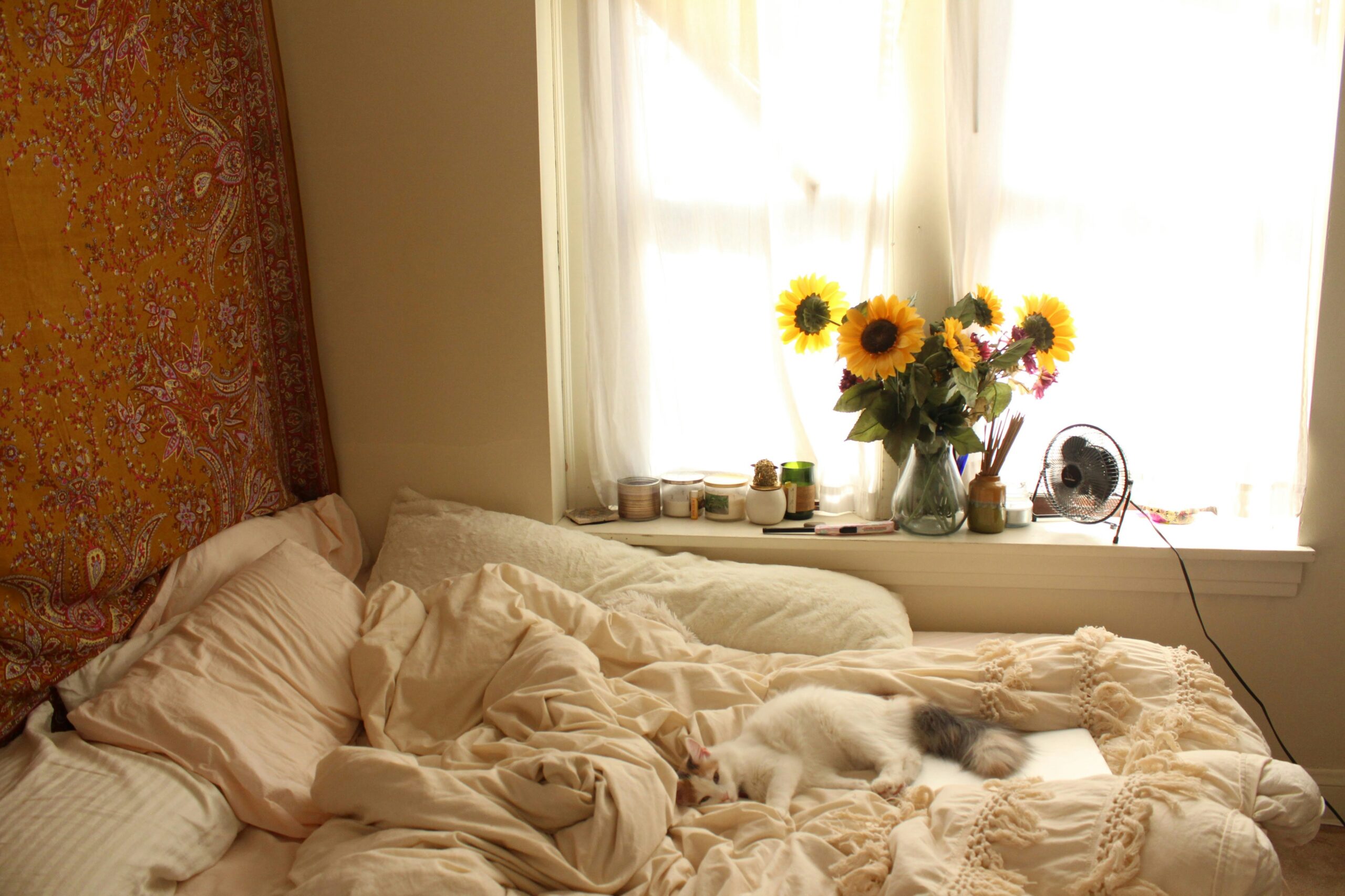
The Feng Shui Bedroom Wealth Setup: Sleep Your Way to Abundance
Eight hours a night in the wrong environment isn’t rest. It’s a slow, invisible leak…
-

How to Set Up a Feng Shui Money Bowl for Abundance (In 10 Minutes)
You’re not bad with money. Your space might just be leaking it silently. Here’s the…
-
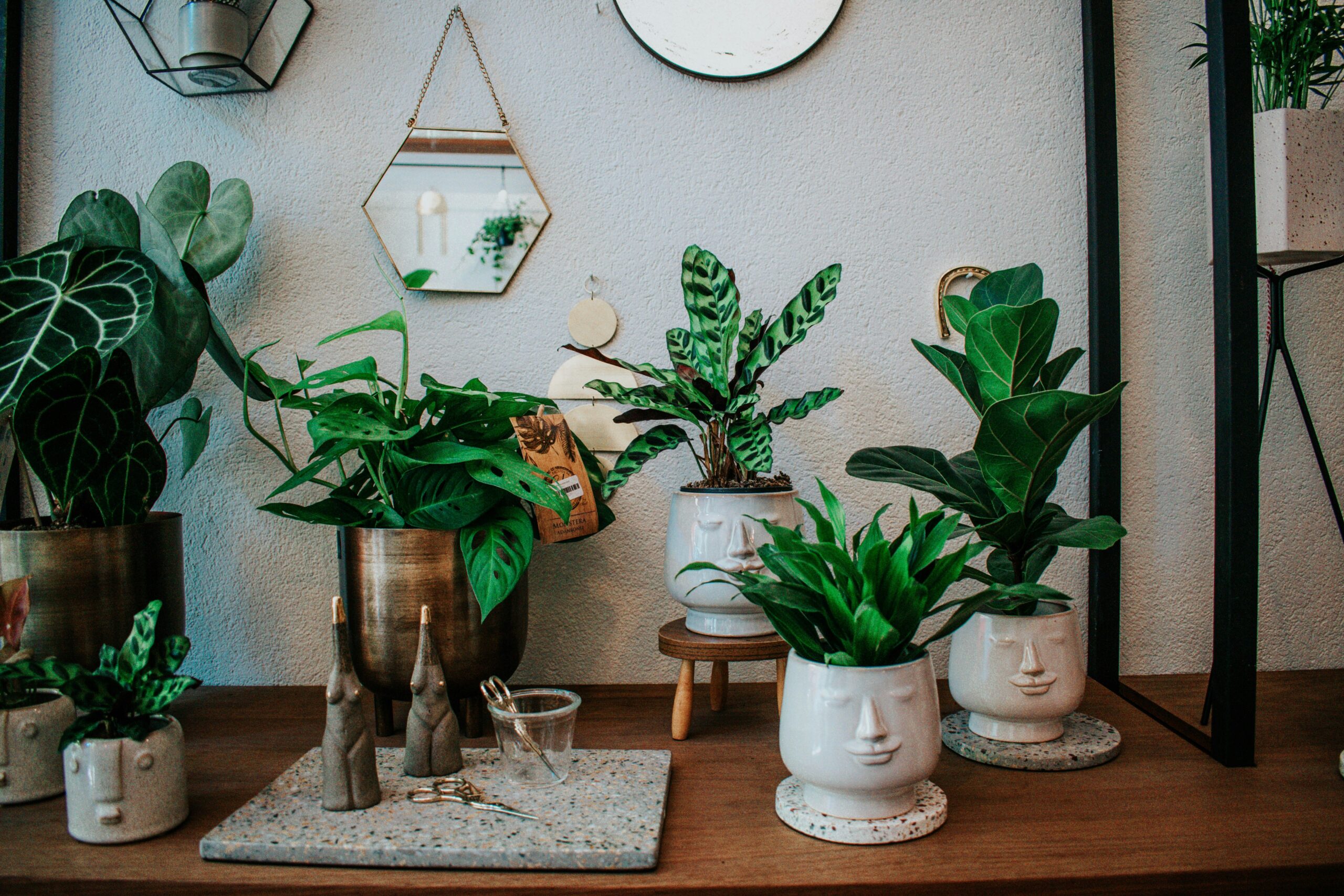
9 Feng Shui for Home Tweaks That Actually Attract Wealth (No clutter Required)
You’ve been running on empty. Not dramatically — just that low, flat, get-through-the-day kind of…
-

What Is Feng Shui, Really? A Skeptic’s Honest Guide to Feng Shui for General Life Improvement
You’ve heard the word a hundred times. You’ve probably moved a plant and called it…
-
Feng Shui wealth Corner: What It Is and Why Yours Is Probably Wrong
You’ve worked hard, done everything right, and still feel financially stuck. The problem isn’t your…